
أسعار السكن ترتفع في أغلب دول العالم بشكل يصعب تجاهله. في أمريكا مثلاً، وصل متوسط سعر المنزل التقليدي إلى نحو 512 ألف دولار في 2025، بينما لا يتجاوز متوسط سعر "المنزل المصغّر" 67 ألف دولار فقط. (المصدر)
هذا الفارق، إضافة لارتفاع الإيجارات، هو أحد الأسباب التي تدفع الناس للبحث عن طرق سكن بديلة. هذه القائمة الكاملة تضم 15 نمطاً موزعة على 4 مجموعات، من أقصى درجات الاستقلالية والترحال، إلى أقرب الأنماط لحياة المدينة اليومية. كل نمط فيه: تاريخه، مثال حقيقي عليه، مميزاته وعيوبه، ومصدر لكل معلومة.
المجموعة الأولى: العيش البدائي والمتنقل
1. الخيام والـ Yurts
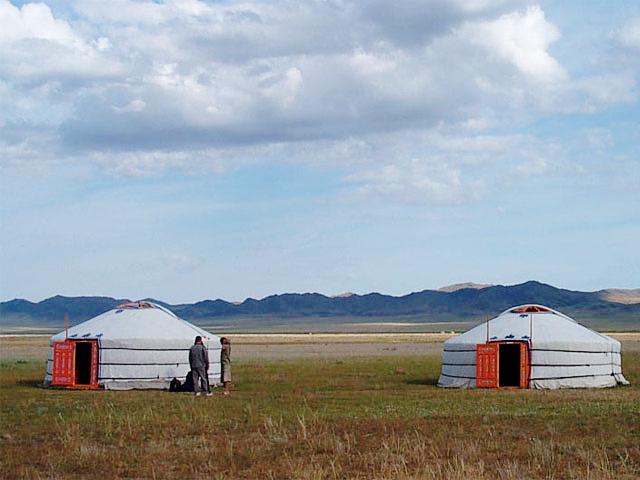
يورتان (خيمتان مغوليتان) في السهوب المنغولية، 1994. المصدر: ويكيميديا كومنز، ملك عام.
مسكن دائري محمول مصنوع تقليدياً من اللباد والخشب، تستخدمه شعوب آسيا الوسطى الرحّالة منذ آلاف السنين.
التاريخ: تعود الخيمة المغولية (Ger) لأكثر من 3000 عام، وارتبطت تاريخياً بجنكيز خان وإمبراطوريته. دخلت أمريكا حديثاً على يد ويليام كوبرثويت (William Coperthwaite)، الذي تأثر بمقال في مجلة ناشيونال جيوغرافيك عام 1962 وبدأ يبني وينشر تصاميم اليورت في الغرب. (المصدر: ناشيونال جيوغرافيك)
مثال حقيقي: اليوم لا يزال أكثر من 60% من سكان العاصمة المنغولية أولان باتور يعيشون في أحياء كاملة من اليورت (يُسمى "غير ديستريكت")، وهذا رقم يتضمن سكان الريف بنسبة تصل حتى 90%.
التكلفة والمهارات: تتراوح تكلفة طقم يورت جاهز مع التأسيس والتركيب بين 6 آلاف و32 ألف دولار تقريباً حسب الحجم والعزل، ولا يحتاج تركيبه مهارات متخصصة، مجرد قدرة على التجميع اليدوي البسيط باتباع التعليمات. (المصدر)
المميزات: تكلفة بناء منخفضة، إمكانية التفكيك والنقل خلال ساعة، عزل حراري جيد نسبياً. العيوب: لا تصمد طويلاً أمام الطقس القاسي بدون صيانة متكررة، مساحة معيشة محدودة.
2. الكهوف والمنازل المحفورة

بيت مطماطة الجوفي التقليدي، تونس. تصوير Bernard Gagnon، رخصة CC BY-SA 3.0.
استغلال حرارة الأرض الطبيعية للعيش تحت السطح مباشرة، بدل البناء فوقه.
التاريخ: من أشهر الأمثلة مطماطة في جنوب تونس، بيوت أمازيغية محفورة في الرمل الصخري منذ قرون، حيث يُحفر حوض دائري ثم تُحفر الغرف حول محيطه. لم تكن هذه المنطقة معروفة عالمياً حتى فيضانات 1969. اشتهرت عالمياً بعد تصوير أجزاء من فيلم حرب النجوم (Star Wars) فيها عام 1976، حيث كان أحد البيوت (فندق سيدي دريس حالياً) بيت لوك سكاي ووكر في الفيلم. (المصدر: ويكيبيديا)
مثال حقيقي آخر: حي ساكرومونتي في غرناطة بإسبانيا، حيث استقر الغجر (الروما) في كهوف التل منذ القرن الخامس عشر بعد سقوط غرناطة، وما زال بعضها مأهولاً حتى اليوم. (المصدر: ناشيونال جيوغرافيك)
التكلفة والمهارات: يكلف البناء الاحترافي لمنزل أرضي محفور من 100 إلى 200 دولار للقدم المربع تقريباً، لكن الحفر التقليدي اليدوي (على طريقة مطماطة) يعتمد أساساً على العمالة اليدوية بتكلفة مواد شبه معدومة. يحتاج تنفيذه الآمن معرفة بطبيعة التربة وهندسة الحفر لتفادي الانهيار. (المصدر)
المميزات: عزل حراري طبيعي ممتاز (بارد صيفاً، دافئ شتاءً) بدون تكييف، تكلفة بناء منخفضة جداً. العيوب: رطوبة وتهوية محدودة، مخاطر إنشائية إذا لم يُحفر بشكل صحيح، وصعوبة تمديد شبكات حديثة.
3. بيوت الأشجار
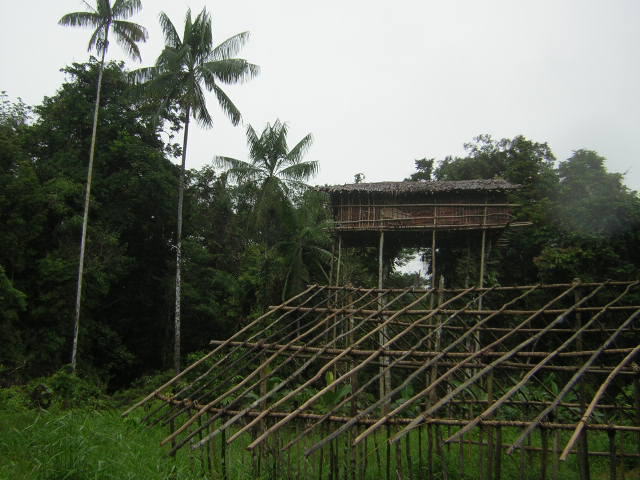
بيت شجرة لقبيلة كوروواي في بابوا غينيا الجديدة. رخصة CC BY 2.0.
منازل خشبية مبنية فوق جذوع الأشجار الكبيرة، عادة كنمط عيش مستقل عن شبكة الكهرباء والماء العامة.
التكلفة والمهارات: يتراوح متوسط تكلفة بيت شجرة بسيط بين 4 و15 ألف دولار، وقد يوفر البناء الذاتي 50-60% من تكلفة العمالة. المهارة الأساسية المطلوبة نجارة عامة، مع معرفة بعتاد التثبيت الآمن على الشجرة الحية دون قتلها. (المصدر)
المميزات: اندماج تام مع الطبيعة المحيطة، رفع المسكن عن مستوى الفيضانات والحيوانات البرية. العيوب: محدودية المساحة والوزن المسموح به على الشجرة، صيانة الشجرة نفسها كعنصر إنشائي حي، ومخاطر السلامة (خصوصاً للأطفال).
4. عيش الفانات والمقطورات (Van Life)

داخلية فان محوّل من The Wee Camper Co. رخصة CC BY-SA 4.0.
تحويل سيارة فان أو مقطورة إلى منزل متنقل متكامل بسرير ومطبخ صغير.
التاريخ: يعود أصل الفكرة لحركة "الهيبيز" وحافلات الفولكس فاغن الملونة في الستينيات، لكن هاشتاغ #vanlife الذي حوّلها لحركة عالمية أطلقه المصور فوستر هنتنغتون (Foster Huntington) عام 2011 بعد ترك وظيفته وشرائه فان قديم. (المصدر: ويكيبيديا)
التكلفة والمهارات: يكلف التحويل الذاتي (DIY) عادة بين 5 و35 ألف دولار حسب مستوى التجهيز، مقابل 9 آلاف حتى أكثر من 75 ألف دولار للتحويل الاحترافي. لا يحتاج البدء خبرة سابقة، لكن معرفة أساسية بالنجارة والكهرباء والعزل تسرّع العمل وتقلل الأخطاء. (المصدر)
المميزات: حرية جغرافية كاملة، تكلفة أقل من الإيجار في المدن الغالية، مناسب للعمل عن بعد. العيوب: مساحة صغيرة جداً للعيش طويل المدى، صعوبة إيجاد أماكن ركن قانونية وآمنة كل ليلة، وتكلفة الصيانة والوقود.
5. العيش على القوارب (Liveaboard)

منازل عائمة على قناة نافيليو في ميلانو. رخصة CC BY 2.0.
تحويل يخت أو قارب سكني إلى مسكن دائم في مرسى أو ممر مائي.
مثال حقيقي: مرسى Gangplank في واشنطن العاصمة يستضيف منذ عام 1977 واحداً من أكبر مجتمعات "العيش على القوارب" في أمريكا، بـ88 مرسى مخصصة لسكان دائمين.
التكلفة والمهارات: يمكن شراء قارب شراعي صالح للسكن بحالة جيدة من 5 إلى 15 ألف دولار كبداية، إضافة إلى رسوم مرسى شهرية تتراوح بين 200 و800 دولار كإضافة خاصة بالسكن الدائم. يتطلب هذا النمط مهارات إبحار أساسية وقدرة على صيانة الأنظمة الكهربائية والميكانيكية البسيطة للقارب بنفسك. (المصدر)
المميزات: إطلالة وهدوء المياه، إمكانية الانتقال بين المدن الساحلية بالقارب نفسه. العيوب: أغلب المراسي لا تسمح بالسكن الدائم (قوائم انتظار طويلة للمسموح منها)، وتكلفة الصيانة والرسو قد تعادل إيجار شقة عادية.
المجموعة الثانية: البناء البديل والاكتفاء الذاتي المستقر
6. بيوت السفن الأرضية (Earthships)

مباني Earthship في تاوس، نيومكسيكو. رخصة CC BY-SA 4.0.
منازل مبنية من نفايات صلبة (إطارات، زجاجات، علب) ومغطاة بالطين، تدير طاقتها ومياهها ذاتياً.
التاريخ: طوّرها المهندس مايكل رينولدز في تاوس بنيومكسيكو، وبنى أول بيت منها عام 1972 من علب الألومنيوم قبل أن يتحول للإطارات المدكوكة بالتراب (حوالي 800-900 إطار للبيت الواحد). (المصدر)
التكلفة والمهارات: يتراوح سعر البناء بمقاول من 200 إلى 300 دولار للقدم المربع، بينما قد ينزل البناء الذاتي بمواد معاد تدويرها إلى 150 دولاراً أو أقل. العمل شاق بدنياً (دكّ الإطارات بالتراب يدوياً) ولا يحتاج شهادة مهنية، لكنه يتطلب صبراً وقوة جسدية على مدى شهور. (المصدر)
المميزات: استقلالية شبه كاملة عن الشبكات العامة، إعادة تدوير فعلي للنفايات كمواد بناء. العيوب: تكلفة العمالة اليدوية والوقت المطلوب للبناء مرتفعة، وتراخيص البناء صعبة في كثير من الولايات (رينولدز نفسه فقد رخصته المعمارية 17 سنة بسبب هذا).
7. المنازل الصغيرة الثابتة (Tiny Houses)

منزل صغير على عجلات، مين، أمريكا. رخصة CC BY 2.0.
منازل لا تتجاوز مساحتها عادة 40 متراً مربعاً، إما على أساسات ثابتة أو على مقطورة متنقلة.
التاريخ: يُنسب إحياء الحركة الحديثة إلى جاي شافر (Jay Shafer)، الذي بنى منزلاً بمساحة 9 أمتار مربعة فقط في أواخر التسعينيات، وأسس "جمعية البيوت الصغيرة" (Small House Society) عام 2002.
بالأرقام: متوسط سعر البيت الصغير في أمريكا حوالي 67 ألف دولار (أرخص بـ87% من المنزل التقليدي)، و68% من ملاكها لا يوجد عليهم قرض عقاري. (المصدر)
المهارات المطلوبة: النجارة الأساسية تكفي لأغلب البناء الذاتي، لكن إذا كان البيت متنقلاً على مقطورة يضاف لها فهم بسيط لتوزيع الوزن والقيادة بحمولة إضافية، وأساسيات الكهرباء والسباكة المصغّرة. (المصدر)
المميزات: تكلفة بناء وأثاث أقل بكثير، سهولة التنقل (إذا كانت على عجلات)، بصمة بيئية أصغر. العيوب: قوانين تقسيم المناطق (Zoning) في كثير من المدن لا تسمح بها كمسكن دائم، ومساحة تخزين محدودة جداً للعائلات.
8. الكبائن الخشبية وبيوت الطين (Log Cabins / Cob Houses)

كوخ خشبي في الغابة، سلوفاكيا. رخصة CC BY-SA 3.0.
بناء يدوي باستخدام الخشب أو خليط الطين والقش والرمل، بأساليب تقليدية قديمة.
التاريخ: أحيا هذا الأسلوب في أمريكا الشمالية المعماري الويلزي إيانتو إيفانز (Ianto Evans) مع شريكته ليندا سمايلي، بعد أن درسا مباني طينية عمرها قرون في بريطانيا وأيرلندا، وبنيا أول بيت طيني حديث في أمريكا الشمالية (انتقلا للعيش فيه 1989)، ثم أسسا شركة Cob Cottage Company عام 1993 في ولاية أوريغون. (المصدر: ويكيبيديا)
التكلفة والمهارات: يتراوح بناء بيت طيني احترافياً بين 150 و450 دولاراً للقدم المربع، لكن المواد الأساسية (طين وقش ورمل) قد لا تتجاوز 3 إلى 6 آلاف دولار لبناء صغير إذا نفّذته بنفسك. من مميزات الطين إنه يمكن تعلّم تقنياته بسرعة بدون خبرة سابقة، لكنه يحتاج مجهوداً بدنياً جماعياً كبيراً. (المصدر)
المميزات: مواد بناء شبه مجانية (تراب محلي)، إمكانية البناء الذاتي بالكامل دون مقاول، عزل حراري طبيعي جيد. العيوب: يتطلب جهداً بدنياً جماعياً كبيراً ووقتاً طويلاً (شهور)، وضعف نسبي في العزل الحراري إذا لم يُدمج مع مواد عازلة أخرى.
9. المنازل المستقلة عن الشبكة (Off-Grid)

كوخ مستقل عن الشبكة بألواح شمسية. تصوير Steve Hillebrand، هيئة الأسماك والحياة البرية الأمريكية، ملك عام.
بيت عادي، وليس بالضرورة مبنياً بطريقة خاصة، لكن صاحبه يختار قطعه تماماً عن شبكات الكهرباء والماء والصرف العامة، ويولّد ويخزّن كل احتياجاته بنفسه عبر الطاقة الشمسية أو الرياح والآبار والخزانات.
التاريخ: يعود الأصل الحديث لحركة "العودة إلى الأرض" في أمريكا بين منتصف الستينيات ومنتصف السبعينيات، بإلهام من كتاب هيلين وسكوت نيرينغ "Living the Good Life" (1954) وكتالوج ستيوارت براند "Whole Earth Catalog" (1968) ومجلة Mother Earth News (1970). بحلول نهاية السبعينيات كان أكثر من مليون شخص قد انتقلوا لأرياف أمريكا بحثاً عن هذا النمط. (المصدر: ويكيبيديا)
بالأرقام: تقدّر مجلة Home Power أن 180 ألف أسرة أمريكية على الأقل تعيش مستقلة عن الشبكة حالياً، وتتوقع بعض الدراسات ارتفاع هذا الرقم مع انخفاض تكلفة الألواح الشمسية والبطاريات. (المصدر)
التكلفة والمهارات: يحتاج التأسيس الكامل (ألواح شمسية وبئر وصرف صحي) عادة من 20 إلى 100 ألف دولار حسب حجم الأرض وتعقيدها. المهارة الأهم هنا مو البناء نفسه، بل القدرة على تشخيص وصيانة أنظمة الطاقة والماء بنفسك، لأنه ما فيه شركة كهرباء تجيك لو تعطّل شي. (المصدر)
المميزات: استقلالية كاملة عن فواتير وانقطاعات الكهرباء والماء، حرية اختيار موقع بعيد ومعزول. العيوب: تكلفة أولية مرتفعة للألواح والبطاريات والبئر والصرف الصحي، ومسؤولية صيانة كل الأنظمة بنفسك دون شبكة احتياط.
المجموعة الثالثة: المجتمعات المتعمدة
10. القرى البيئية (Ecovillages)

توربينات الرياح المملوكة جماعياً في قرية فيندهورن البيئية. ملك عام.
مجتمعات مخططة عمداً لإنتاج طاقتها وغذاءها ومياهها بشكل جماعي.
التاريخ: صاغ الباحثان روبرت وديان جيلمان المصطلح عام 1991 ضمن تقرير لمؤسسة غايا (Gaia Trust) الدنماركية، ما قاد لتأسيس الشبكة العالمية للقرى البيئية (GEN) عام 1995 في مؤتمر بقرية فيندهورن باسكتلندا. يوجد اليوم أكثر من 400 قرية بيئية مسجّلة حول العالم. (المصدر)
مثال حقيقي: فيندهورن نفسها (تأسست كمجتمع 1962) تستهلك موارد أقل بنحو 50% من المعدل البريطاني، بفضل توربينات رياح مملوكة جماعياً. (المصدر)
التكلفة والمهارات: تتفاوت رسوم الانضمام بشكل كبير: من صفر في بعض القرى مثل Dancing Rabbit، إلى نحو 10 آلاف دولار كرسوم عضوية في Earthaven، وحتى 40 ألف دولار كرسوم إيجار قطعة أرض في White Hawk. لا تحتاج مهارة معينة للانضمام، لكن مهارات التواصل واتخاذ القرار الجماعي أهم من أي شهادة. (المصدر)
المميزات: تقسيم المهام يريح الفرد، شبكة أمان اجتماعي قوية، تكلفة معيشة أقل. العيوب: صعوبة اتخاذ القرار الجماعي (السبب الأول لفشل أغلب القرى البيئية)، وفترة انضمام طويلة قبل القبول الكامل.
11. الكوميونات الزراعية المشتركة الملكية

مستعمرة هوتريت زراعية في مانيتوبا، كندا (صورة تاريخية). ملك عام.
مجتمعات تعيش وتعمل بالزراعة الجماعية، حيث الأرض والدخل ملك مشترك للجميع، لا لأفراد.
التاريخ: أقدم وأكبر نموذج مستمر هو مجتمعات الهوتريين (Hutterites) في أمريكا الشمالية، أنشأها ياكوب هوتر كحركة دينية أناباتيستية سنة 1528 في أوروبا، وهاجرت لأمريكا الشمالية عام 1874 (أول مستعمرة في ساوث داكوتا). اليوم يعيش حوالي 40-50 ألف هوتري في نحو 400 "كولوني" زراعية عبر كندا وأمريكا، يديرون مزارعهم بملكية جماعية كاملة حتى الآن. (المصدر: ويكيبيديا)
التكلفة والمهارات: لا يوجد رأس مال شخصي مطلوب للانضمام لأن كل شيء ملك جماعي، لكن القبول يتطلب التزاماً دينياً وعقائدياً صارماً، ومهارات زراعية وحرفية عملية تخدم المجتمع (فلاحة، نجارة، طبخ جماعي). (المصدر: ويكيبيديا)
المميزات: أمان اقتصادي شبه كامل (لا بطالة ولا إيجار داخل المجتمع)، تعليم ورعاية صحية جماعية. العيوب: تقييد كبير على الملكية الفردية والقرارات الشخصية، وارتباط وثيق بمنظومة دينية/عقائدية صارمة يصعب الانضمام إليها من خارجها.
12. الإسكان التشاركي (Cohousing)

مجمع Marmalade Lane للإسكان التشاركي في كامبريدج، بريطانيا. رخصة CC BY-SA 4.0.
كل أسرة تملك بيتها المستقل بالكامل، لكن المبنى يتشارك في مساحات ومرافق مشتركة.
التاريخ: ظهرت الفكرة في الدنمارك أوائل السبعينيات، ونقلتها لأمريكا الشمالية المعمارية كاثرين مكمانانت وزوجها تشارلز دوريت عبر كتابهما 1988، وصمما أول مجمع Cohousing أمريكي (Muir Commons في كاليفورنيا). (المصدر)
بالأرقام: يوجد اليوم أكثر من 170 مجمع Cohousing في 36 ولاية أمريكية. (المصدر)
التكلفة والمهارات: تتراوح أسعار الوحدات غالباً مثل سوق العقار العادي بنفس المدينة، من أمثلة منخفضة قرابة 120 ألف دولار في مجمعات مصممة للقدرة المادية، إلى أكثر من 700 ألف دولار في مواقع باهظة. لا تحتاج مهارة بناء، لكن الاستعداد لحضور اجتماعات إدارة دورية والمشاركة بقرارات جماعية شرط أساسي. (المصدر)
المميزات: أدوات مشتركة عالية الجودة بدل تكرارها في كل بيت، خصوصية كاملة مع مجتمع داعم. العيوب: تكلفة تأسيس أولية مرتفعة، والتزام حضور اجتماعات دورية لإدارة المجمع.
أمثلة أخرى على مجتمعات مقصودة حول العالم

ماتريماندير، مركز مدينة أوروفيل الروحية في تاميل نادو، الهند. تصوير Matthew T. Rader، رخصة CC BY-SA 4.0.
القائمة أعلاه أنماط عامة، لكن خلفها مئات المجتمعات المقصودة الحقيقية حول العالم. من أبرزها:
أوروفيل (الهند): "مدينة عالمية تجريبية" أسستها ميرا ألفاسا ("الأم") عام 1968 بحضور مندوبين من 124 دولة، وصُمّمت لتتسع لـ50 ألف نسمة، ويعيش فيها اليوم حوالي 3300 شخص من 61 جنسية، ما يجعلها أقدم وأكبر مجتمع مقصود دولي مستمر في العالم. (المصدر: ويكيبيديا)
توين أوكس (فرجينيا، أمريكا): أسسها 8 أشخاص عام 1967 على مزرعة تبغ مساحتها 123 فداناً، مستوحاة من رواية "والدن تو" لعالم النفس ب. ف. سكينر، وتقوم على تقاسم الدخل والمساواة الكاملة بين الأعضاء. يعيش فيها اليوم نحو 100 شخص بالغ يمولون المجتمع عبر بيع التوفو والحمّالات الشبكية (hammocks). (المصدر: ويكيبيديا)
تاميرا (البرتغال): أسسها عام 1995 عالم النفس ديتر دوم مع سابينه ليشتنفلز وراينر إرنبرايس في إقليم أليينتيخو، تحت مسمى "قرية أبحاث السلام"، بهدف بناء نموذج مجتمعي مكتفٍ ذاتياً وقابل للتكرار قائم على التعاون اللاعنفي بين الناس والطبيعة. (المصدر: ويكيبيديا)
المجموعة الرابعة: البدائل داخل المدينة
13. العيش التشاركي الحضري (Co-Living)
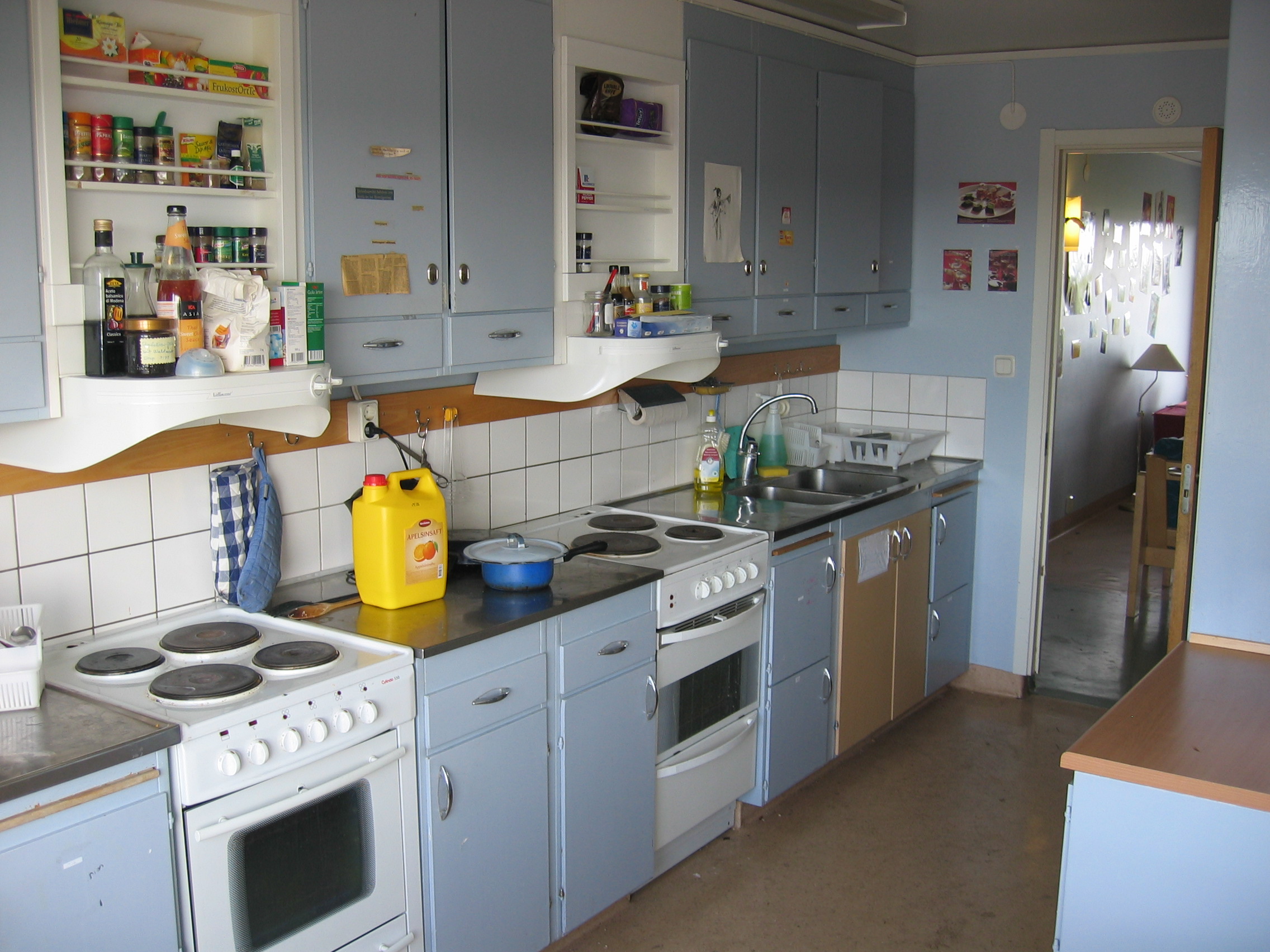
مطبخ مشترك في سكن طلابي بأوبسالا، السويد. رخصة CC BY 2.0.
تشارك عدة أشخاص شقة أو مبنى واحد داخل المدينة، مع توزيع الإيجار والأدوات والطبخ.
مثال حقيقي: شركتا Habyt وCommon، من كبرى شركات تشغيل الشقق المشتركة عالمياً، اندمجتا 2023 لإدارة أكثر من 30 ألف وحدة في 40 مدينة حول 14 دولة. (المصدر)
التكلفة والمهارات: يتراوح الإيجار الشهري غالباً بين 1600 و2600 دولار في المدن الكبرى (يشمل الإنترنت والفواتير والتنظيف)، بدون أي تكلفة تأسيسية مسبقة. ما فيه مهارة مطلوبة سوى الارتياح للعيش مع غرباء ومشاركة المساحات المشتركة. (المصدر)
المميزات: تقليل مصاريف المعيشة بشكل ملحوظ، مرونة في تغيير السكن، مجتمع اجتماعي جاهز. العيوب: خصوصية أقل، وحساسية عالية لسوء التوافق الشخصي بين السكان.
14. التعاونيات السكنية (Housing Cooperatives)
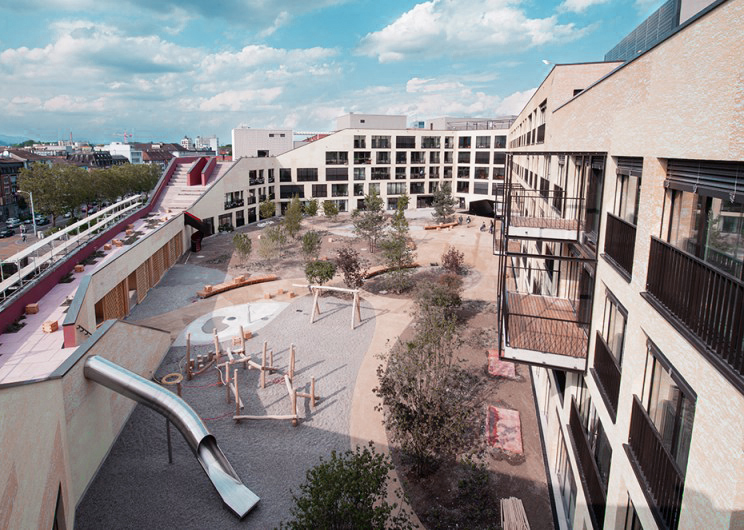
مبنى تعاونية كالكبرايته السكنية في زيورخ. رخصة CC BY-SA 4.0.
سكان يشترون "حصة" في جمعية غير ربحية تملك المبنى بأكمله، بدل شراء الشقة فردياً من مطوّر ربحي.
التاريخ: أشهر تجربة عالمية في زيورخ بسويسرا، حيث بدأت تعاونيات الإسكان أواخر القرن التاسع عشر، وتوسعت بشكل كبير بعد استفتاء بلدي عام 1907 سهّل تمويلها. تعاونية ABZ وحدها (تأسست 1916) تُسكن اليوم أكثر من 12 ألف شخص. وفي فيينا، 43% من مساكن المدينة تخضع لنموذج مشابه غير ربحي. (المصدر)
التكلفة والمهارات: في التعاونيات ذات القيمة السوقية تحتاج دفعة أولى تعادل 20-25% من قيمة الوحدة عادة، بينما تعاونيات الملكية المحدودة قد تكتفي بسعر حصة منخفض يصل لنحو 5 آلاف دولار فقط. لا تحتاج مهارة بناء، لكن غالباً يُطلب منك المشاركة في لجان إدارة المبنى بعد الانضمام. (المصدر)
المميزات: إيجارات أقل بكثير من السوق (لأن الهدف ليس الربح)، واستقرار طويل الأمد بلا خطر إخلاء مفاجئ. العيوب: قوائم انتظار طويلة جداً للانضمام في المدن التي تطبقها بنجاح، ومحدودية الانتشار خارج أوروبا.
ملاحظة مهمة: يختلف هذا تماماً عن "الاحتلال غير المصرح به للمباني" (Squatting) الذي انتشر في أوروبا في السبعينيات والثمانينيات (أمستردام، برلين) كاحتجاج على أزمات السكن. أغلب هذه الحركة تحولت لغير قانونية رسمياً في السنوات الأخيرة (هولندا جرّمتها بالكامل في أكتوبر 2010)، وبعض المباني المُحتلة تاريخياً تحولت لاحقاً إلى تعاونيات سكنية رسمية بعد تفاوض قانوني. أنصح بعدم اعتبار الاحتلال خياراً عملياً اليوم؛ التعاونيات القانونية هي البديل العملي والمستدام. (المصدر)
15. تبادل السكن مقابل العمل (House Sitting / Workaway)

شخص يعتني بعدة كلاب أثناء نزهة، تصوير مستخدم Colin. رخصة CC BY-SA 3.0.
عيش متنقل بلا مسكن ثابت، عبر السكن في منازل الآخرين مقابل رعايتها أو رعاية حيواناتهم أثناء سفرهم، أو مقابل ساعات عمل يومية بسيطة.
التاريخ: من أشهر منصات هذا المجال TrustedHousesitters، أسسها آندي بيك في بريطانيا عام 2010، وتربط اليوم أعضاء في أكثر من 140 دولة. أما Workaway فتعمل بنموذج مختلف قليلاً: تبادل 4-5 ساعات عمل يومي (زراعة، نجارة، تعليم) مقابل السكن والطعام. (المصدر)
التكلفة والمهارات: تكلفة الدخول شبه معدومة: عضوية TrustedHousesitters السنوية بين 129 و299 دولاراً، وعضوية Workaway حوالي 49 دولاراً سنوياً فقط. المهارة المطلوبة تعتمد على المنصة: رعاية حيوانات ومسؤولية أساسية لـHouse Sitting، ومهارات عملية (زراعة، نجارة، تعليم) لـWorkaway. (المصدر)
المميزات: تكلفة سكن شبه معدومة أثناء السفر، فرصة عيش تجربة محلية حقيقية في بلد جديد. العيوب: غير مناسب كحل سكن دائم أو مستقر، ويتطلب مرونة عالية والتزاماً فعلياً بالمهام المتفق عليها.
الخلاصة
خمسة عشر نمطاً، من كهف في تونس إلى شقة مشتركة في وسط المدينة، لكن القاسم المشترك بينها كلها واحد: تقليل التكلفة الفردية عن طريق مشاركة الموارد أو التخلي عن بعضها، بدرجات متفاوتة من الاستقلالية والتشارك.
كل المصادر المستخدمة
- Tiny House Statistics 2025 – illustrarch
- Yurt – National Geographic Education
- Matmata, Tunisia – Wikipedia
- Cave dwellers of Granada – National Geographic
- Van-dwelling – Wikipedia
- Earthship History
- Ianto Evans – Wikipedia
- Back-to-the-land movement – Wikipedia
- How Many People Live Off-Grid in the US – Battlbox
- Robert Gilman – Wikipedia
- Findhorn Foundation History
- Hutterites – Wikipedia
- Kathryn McCamant – Wikipedia
- Auroville – Wikipedia
- Twin Oaks Community, Virginia – Wikipedia
- Tamera – Wikipedia
- Alternative Housing in the U.S. – StorageCafe
- Co-Living Market Report – Market.us
- Cooperative housing in Zurich – Shelterforce
- Squatting – Wikipedia
- TrustedHousesitters – About
- Yurt Cost Guide – HomeGuide
- Costs of Building an Earth-Sheltered Home
- Treehouse Cost Guide – HomeGuide
- Van Conversion Cost Breakdown – The Van Smith
- Affordable Liveaboard Sailboats – Life of Sailing
- Earthship Cost Guide – HomeGuide
- Cob House Building Cost – Angi
- Off-Grid Solar System Cost Guide – This Old House
- What It Costs – Earthaven Ecovillage
- Cohousing Costs – Cohousing Association of the US
- Co-living NYC: Common in Crown Heights – Brownstoner
- Market-Rate and Limited-Equity Co-ops Explained – ROC USA
جميع صور هذه المقالة من Wikimedia Commons برخص مشاع إبداعي أو ملك عام، مع ذكر المصور والرخصة أسفل كل صورة. ملاحظة: أرقام حجم الأسواق (مثل عدد وحدات السكن المشترك) تقديرات تقريبية تختلف بين شركات الأبحاث.
Housing prices are climbing in most of the world in ways that are hard to ignore. In the US, for example, the average traditional home price reached around $512,000 in 2025, while the average "tiny house" costs only about $67,000. (source)
That gap, on top of rising rents, is one of the reasons people are searching for alternative ways to live. This full list covers 15 living styles across 4 groups, from the most independent and nomadic, to the styles closest to everyday city life. Each style includes: its history, a real example, its pros and cons, and a source for every fact.
Group One: Primitive and Mobile Living
1. Tents and Yurts
Two gers (Mongolian yurts) on the Mongolian steppe, 1994. Source: Wikimedia Commons, public domain.
A round, portable dwelling traditionally made of felt and wood, used by the nomadic peoples of Central Asia for thousands of years.
History: The Mongolian ger dates back more than 3,000 years and is historically tied to Genghis Khan and his empire. It entered America more recently through William Coperthwaite, who was inspired by a 1962 National Geographic article and began building and popularizing yurt designs in the West. (Source: National Geographic)
Real example: Today, more than 60% of residents in Ulaanbaatar, Mongolia's capital, still live in entire districts made of gers (called "ger districts"), a figure that reaches as high as 90% when including rural residents.
Cost & Skills: A ready-made yurt kit with foundation and setup runs roughly $6,000 to $32,000 depending on size and insulation, and assembling it needs no specialized trade skills, just basic hands-on assembly following instructions. (Source)
Pros: Low build cost, can be dismantled and moved within an hour, relatively good thermal insulation. Cons: Doesn't hold up well against harsh weather without frequent maintenance, limited living space.
2. Caves and Dug-Out Homes
A traditional troglodyte house in Matmata, Tunisia. Photo by Bernard Gagnon, CC BY-SA 3.0.
Using the earth's natural insulation to live directly underground, instead of building on top of it.
History: One of the most famous examples is Matmata in southern Tunisia, Berber homes dug into the sandy rock for centuries, where a circular pit is dug first, then rooms are carved around its perimeter. The area wasn't internationally known until the 1969 floods. It became world-famous after parts of Star Wars were filmed there in 1976, with one of the houses (now the Sidi Driss Hotel) serving as Luke Skywalker's home in the film. (Source: Wikipedia)
Another real example: The Sacromonte neighborhood in Granada, Spain, where the Roma settled in hillside caves starting in the 15th century after the fall of Granada, and some are still inhabited today. (Source: National Geographic)
Cost & Skills: Professionally built earth-sheltered homes run about $100 to $200 per square foot, while traditional hand-dug construction (like Matmata) relies mainly on manual labor with almost no material cost. Building it safely requires real knowledge of soil behavior and excavation engineering to avoid collapse. (Source)
Pros: Excellent natural thermal insulation (cool in summer, warm in winter) with no air conditioning, very low build cost. Cons: Limited humidity control and ventilation, structural risks if not dug properly, and difficulty running modern utility lines.
3. Treehouses
A treehouse of the Korowai tribe in Papua New Guinea. CC BY 2.0.
Wooden homes built atop large tree trunks, usually as a way of living independent from public electricity and water networks.
Cost & Skills: A basic treehouse averages $4,000 to $15,000 to build, and doing it yourself can save 50-60% on labor costs. The core skill needed is general carpentry, plus knowing how to anchor safely to a living tree without harming it. (Source)
Pros: Full integration with the surrounding nature, keeps the dwelling above flood levels and wild animals. Cons: Limited space and weight the tree can bear, ongoing maintenance of the tree itself as a living structural element, and safety risks (especially for children).
4. Van Life
Converted campervan interior by The Wee Camper Co. CC BY-SA 4.0.
Converting a van or trailer into a fully self-contained mobile home with a bed and small kitchen.
History: The idea traces back to the hippie movement and the colorful Volkswagen buses of the 1960s, but the #vanlife hashtag that turned it into a global movement was started by photographer Foster Huntington in 2011 after he quit his job and bought an old van. (Source: Wikipedia)
Cost & Skills: A DIY conversion typically costs $5,000 to $35,000 depending on how finished it is, versus $9,000 to well over $75,000 for a professional build. No prior experience is required to start, but basic carpentry, electrical, and insulation knowledge speeds things up and reduces costly mistakes. (Source)
Pros: Complete geographic freedom, cheaper than rent in expensive cities, suited to remote work. Cons: Very little space for long-term living, difficulty finding legal and safe parking every night, and maintenance and fuel costs.
5. Liveaboard Boats
Houseboats on the Navigli canal in Milan. CC BY 2.0.
Converting a yacht or houseboat into a permanent home in a marina or waterway.
Real example: The Gangplank Marina in Washington, D.C. has hosted, since 1977, one of the largest "liveaboard" communities in America, with 88 slips designated for permanent residents.
Cost & Skills: A livable entry-level sailboat can be bought for $5,000 to $15,000, on top of a monthly liveaboard marina surcharge of $200 to $800. This lifestyle requires basic sailing ability and the willingness to handle your own simple electrical and mechanical boat maintenance. (Source)
Pros: Waterfront views and calm, the ability to move between coastal cities in the same boat. Cons: Most marinas don't allow permanent residency (long waitlists for the ones that do), and maintenance and mooring costs can equal a regular apartment's rent.
Group Two: Alternative Building and Stable Self-Sufficiency
6. Earthships
Earthship buildings in Taos, New Mexico. CC BY-SA 4.0.
Homes built from solid waste (tires, bottles, cans) and covered in earth, managing their own energy and water.
History: Developed by architect Michael Reynolds in Taos, New Mexico, who built the first one in 1972 out of aluminum cans before switching to earth-rammed tires (around 800-900 tires per house). (Source)
Cost & Skills: A contractor-built Earthship runs $200 to $300 per square foot, while a self-built version using reclaimed materials can drop to around $150 or less. The work itself (hand-pounding earth into tires) is physically demanding and needs no professional license, but it does demand real physical stamina and patience over several months. (Source)
Pros: Near-complete independence from public utility grids, genuine recycling of waste as building material. Cons: High labor cost and time required to build, and building permits are difficult in many states (Reynolds himself lost his architecture license for 17 years over this).
7. Tiny Houses
A tiny house on wheels in Maine, USA. CC BY 2.0.
Homes that usually don't exceed 40 square meters, either on a fixed foundation or a movable trailer.
History: The revival of the modern movement is credited to Jay Shafer, who built a home of just 9 square meters in the late 1990s and founded the Small House Society in 2002.
By the numbers: The average tiny house in America costs around $67,000 (87% cheaper than a traditional home), and 68% of owners carry no mortgage on it. (Source)
Skills Needed: Basic carpentry covers most of the self-build, but a trailer-mounted tiny house also calls for understanding weight distribution and towing, plus basic electrical and compact plumbing work. (Source)
Pros: Much lower build and furnishing costs, easy to move (if on wheels), smaller environmental footprint. Cons: Zoning laws in many cities don't allow them as permanent residences, and very limited storage for families.
8. Log Cabins / Cob Houses
A wooden log cabin in the forest, Slovakia. CC BY-SA 3.0.
Hand-built construction using wood or a mix of clay, straw, and sand, following old traditional methods.
History: This style was revived in North America by Welsh architect Ianto Evans and his partner Linda Smiley, after they studied centuries-old clay buildings in Britain and Ireland, and built the first modern cob house in North America (moving into it in 1989), then founded the Cob Cottage Company in 1993 in Oregon. (Source: Wikipedia)
Cost & Skills: A professionally built cob house runs $150 to $450 per square foot, but the core materials (clay, straw, sand) can cost as little as $3,000 to $6,000 for a small self-built structure. Cob is famously easy to learn with no prior experience, though it demands a lot of collective physical labor. (Source)
Pros: Nearly free building materials (local earth), fully self-buildable without a contractor, good natural thermal insulation. Cons: Requires significant collective physical labor and a long time (months), and relatively weak thermal insulation if not combined with other insulating materials.
9. Off-Grid Homes
An off-grid cabin powered by solar panels. Photo by Steve Hillebrand, U.S. Fish and Wildlife Service, public domain.
An ordinary house, not necessarily built any differently, whose owner chooses to disconnect entirely from public power, water, and sewage networks, generating and storing everything needed through solar or wind power, wells, and tanks.
History: The modern roots trace back to America's back-to-the-land movement between the mid-1960s and mid-1970s, inspired by Helen and Scott Nearing's book "Living the Good Life" (1954), Stewart Brand's Whole Earth Catalog (1968), and Mother Earth News magazine (1970). By the end of the 1970s, more than a million people had relocated to rural America in search of this way of living. (Source: Wikipedia)
By the numbers: Home Power magazine estimates at least 180,000 American families currently live off-grid, and some market research expects that number to keep rising as solar panel and battery costs keep falling. (Source)
Cost & Skills: A full setup (solar panels, well, septic) typically runs $20,000 to $100,000 depending on the land and its complexity. The most important skill here isn't construction itself, but the ability to diagnose and maintain your own power and water systems, since there's no utility company to call when something breaks. (Source)
Pros: Complete independence from utility bills and power or water outages, freedom to choose a remote, isolated location. Cons: High upfront cost for panels, batteries, a well, and septic systems, and full responsibility for maintaining every system yourself with no backup network.
Group Three: Intentional Communities
10. Ecovillages
The community-owned wind turbines at Findhorn Ecovillage. Public domain.
Communities intentionally planned to collectively produce their own energy, food, and water.
History: Researchers Robert and Diane Gilman coined the term in 1991 in a report for the Danish Gaia Trust, which led to the founding of the Global Ecovillage Network (GEN) in 1995 at a conference in Findhorn, Scotland. More than 400 registered ecovillages exist worldwide today. (Source)
Real example: Findhorn itself (founded as a community in 1962) consumes about 50% fewer resources than the British average, thanks to community-owned wind turbines. (Source)
Cost & Skills: Joining fees vary enormously: zero at some villages like Dancing Rabbit, around $10,000 in membership fees at Earthaven, and up to $40,000 for a lot lease at White Hawk. No particular trade skill is required to join, but communication and consensus decision-making matter more than any certificate. (Source)
Pros: Division of tasks eases the burden on individuals, strong social safety net, lower cost of living. Cons: Difficulty of collective decision-making (the number one reason most ecovillages fail), and a long membership period before full acceptance.
11. Communal-Ownership Agricultural Communes
A Hutterite farming colony in Manitoba, Canada (historical photo). Public domain.
Communities that live and work through collective farming, where land and income are owned jointly by everyone, not by individuals.
History: The oldest and largest surviving model is the Hutterite communities of North America, founded by Jakob Hutter as an Anabaptist religious movement in 1528 in Europe, which migrated to North America in 1874 (the first colony in South Dakota). Today, around 40,000-50,000 Hutterites live across roughly 400 farming "colonies" in Canada and the US, still managing their farms under full collective ownership. (Source: Wikipedia)
Cost & Skills: No personal capital is required to join since everything is communally owned, but acceptance requires strict religious and doctrinal commitment, along with practical farming and trade skills that serve the community (agriculture, carpentry, communal cooking). (Source: Wikipedia)
Pros: Near-complete economic security (no unemployment or rent within the community), collective education and healthcare. Cons: Major restrictions on individual property and personal decisions, and a close tie to a strict religious/doctrinal system that's hard to join from the outside.
12. Cohousing
The Marmalade Lane cohousing development in Cambridge, UK. CC BY-SA 4.0.
Each family fully owns their own independent home, but the building shares common spaces and facilities.
History: The idea emerged in Denmark in the early 1970s, and was brought to North America by architect Kathryn McCamant and her husband Charles Durrett through their 1988 book, and they designed the first American cohousing complex (Muir Commons in California). (Source)
By the numbers: There are more than 170 cohousing communities across 36 US states today. (Source)
Cost & Skills: Unit prices usually track the regular housing market in the same city, from affordable examples around $120,000 in cost-conscious developments to well over $700,000 in expensive locations. No construction skill is needed, but a willingness to attend regular management meetings and participate in group decisions is essential. (Source)
Pros: High-quality shared tools instead of duplicating them in every home, full privacy paired with a supportive community. Cons: High initial setup cost, and a commitment to attending regular meetings to manage the complex.
More Examples of Intentional Communities Around the World
The Matrimandir, the spiritual center of Auroville, Tamil Nadu, India. Photo by Matthew T. Rader, CC BY-SA 4.0.
The list above covers general patterns, but behind it are hundreds of real intentional communities around the world. Some of the best known:
Auroville (India): An "experimental universal township" founded by Mirra Alfassa ("the Mother") in 1968, inaugurated with delegates from 124 nations. Designed to hold 50,000 people, it's currently home to around 3,300 residents from 61 nationalities, making it the oldest and largest surviving international intentional community in the world. (Source: Wikipedia)
Twin Oaks (Virginia, USA): Founded in 1967 by eight people on a 123-acre former tobacco farm, inspired by psychologist B. F. Skinner's novel "Walden Two," built on income-sharing and full equality among members. Around 100 adults live there today, funding the community through their tofu and hammock businesses. (Source: Wikipedia)
Tamera (Portugal): Founded in 1995 by psychoanalyst Dieter Duhm along with Sabine Lichtenfels and Rainer Ehrenpreis in the Alentejo region, described as a "peace research village" aiming to build a self-sufficient, replicable model of nonviolent cooperation between people and nature. (Source: Wikipedia)
Group Four: Alternatives Within the City
13. Urban Co-Living
A shared kitchen in student housing in Uppsala, Sweden. CC BY 2.0.
Several people share one apartment or building within the city, splitting rent, tools, and cooking.
Real example: Habyt and Common, two of the largest co-living operators worldwide, merged in 2023 to manage more than 30,000 units across 40 cities in 14 countries. (Source)
Cost & Skills: Monthly rent typically runs $1,600 to $2,600 in major cities (including Wi-Fi, bills, and cleaning), with no upfront build cost at all. No particular skill is required beyond being comfortable living with strangers and sharing common spaces. (Source)
Pros: Noticeably lower living expenses, flexibility to change residence, a ready-made social community. Cons: Less privacy, and high sensitivity to poor personal fit between residents.
14. Housing Cooperatives
The Kalkbreite housing cooperative building in Zurich. CC BY-SA 4.0.
Residents buy a "share" in a non-profit association that owns the entire building, instead of buying an individual apartment from a for-profit developer.
History: The world's most famous example is in Zurich, Switzerland, where housing cooperatives began in the late 19th century and expanded significantly after a 1907 municipal referendum made financing easier. The ABZ cooperative alone (founded 1916) houses more than 12,000 people today. In Vienna, 43% of the city's housing falls under a similar non-profit model. (Source)
Cost & Skills: Market-rate cooperatives usually require a down payment equal to 20-25% of the unit's value, while limited-equity co-ops can have a share price as low as around $5,000. No construction skill is needed, but you're typically expected to serve on building management committees after joining. (Source)
Pros: Much lower rents than the market rate (since the goal isn't profit), and long-term stability with no risk of sudden eviction. Cons: Very long waitlists to join in the cities where it works well, and limited spread outside Europe.
Important note: This is entirely different from unauthorized building occupation ("squatting"), which spread across Europe in the 1970s and 80s (Amsterdam, Berlin) as a protest against housing crises. Most of that movement has become formally illegal in recent years (the Netherlands fully criminalized it in October 2010), and some historically squatted buildings later became formal housing cooperatives after legal negotiation. I'd advise against treating squatting as a practical option today; legal cooperatives are the practical, sustainable alternative. (Source)
15. House Sitting / Workaway
A person caring for several dogs on a walk. Photo by Wikimedia user Colin, CC BY-SA 3.0.
A mobile way of living without a fixed home, by staying in other people's houses in exchange for caring for the property or their pets while they travel, or in exchange for simple daily work hours.
History: One of the best-known platforms in this space is TrustedHousesitters, founded by Andy Peck in Britain in 2010, which today connects members in more than 140 countries. Workaway operates on a slightly different model: exchanging 4-5 hours of daily work (farming, carpentry, teaching) for housing and food. (Source)
Cost & Skills: Entry cost is nearly zero: TrustedHousesitters annual membership runs $129 to $299, and Workaway membership is only about $49 a year. The skills needed depend on the platform: basic pet care and responsibility for house sitting, and practical skills (farming, carpentry, teaching) for Workaway. (Source)
Pros: Nearly zero housing cost while traveling, a chance to live a genuine local experience in a new country. Cons: Not suitable as a permanent or stable housing solution, and requires high flexibility and real commitment to the agreed-upon tasks.
In Summary
Fifteen styles, from a cave in Tunisia to a shared apartment in a city center, but they all share one thing in common: lowering individual cost by sharing resources or giving some of them up, to varying degrees of independence and sharing.
All Sources Used
- Tiny House Statistics 2025 – illustrarch
- Yurt – National Geographic Education
- Matmata, Tunisia – Wikipedia
- Cave dwellers of Granada – National Geographic
- Van-dwelling – Wikipedia
- Earthship History
- Ianto Evans – Wikipedia
- Back-to-the-land movement – Wikipedia
- How Many People Live Off-Grid in the US – Battlbox
- Robert Gilman – Wikipedia
- Findhorn Foundation History
- Hutterites – Wikipedia
- Kathryn McCamant – Wikipedia
- Auroville – Wikipedia
- Twin Oaks Community, Virginia – Wikipedia
- Tamera – Wikipedia
- Alternative Housing in the U.S. – StorageCafe
- Co-Living Market Report – Market.us
- Cooperative housing in Zurich – Shelterforce
- Squatting – Wikipedia
- TrustedHousesitters – About
- Yurt Cost Guide – HomeGuide
- Costs of Building an Earth-Sheltered Home
- Treehouse Cost Guide – HomeGuide
- Van Conversion Cost Breakdown – The Van Smith
- Affordable Liveaboard Sailboats – Life of Sailing
- Earthship Cost Guide – HomeGuide
- Cob House Building Cost – Angi
- Off-Grid Solar System Cost Guide – This Old House
- What It Costs – Earthaven Ecovillage
- Cohousing Costs – Cohousing Association of the US
- Co-living NYC: Common in Crown Heights – Brownstoner
- Market-Rate and Limited-Equity Co-ops Explained – ROC USA
All images in this article are from Wikimedia Commons under Creative Commons or public domain licenses, with photographer and license credited under each image. Note: market-size figures (like the number of co-living units) are rough estimates that vary between research firms.